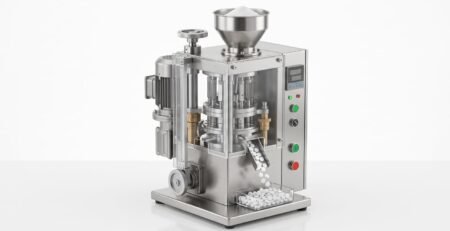
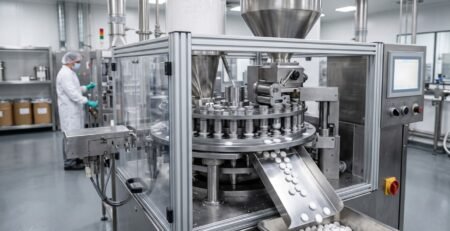
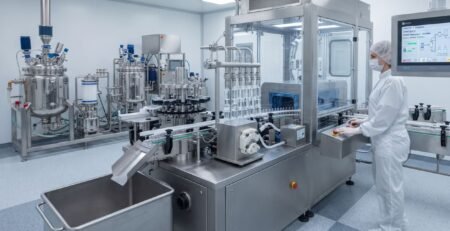
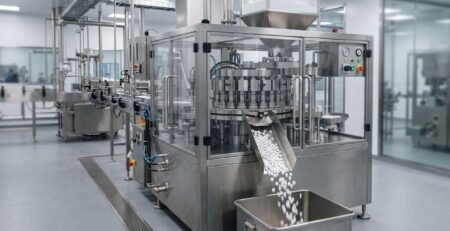
Precision plays a crucial role in the modern pharmaceutical and nutraceutical industries. A tablet press is no longer just a tool that compresses powder into small molds. Today's high-tech machines are at the heart of production and are revolutionizing how medicines, dietary supplements, and even specialty cosmetic products are manufactured. They combine speed, accuracy, and versatility in ways that were unthinkable just a few years ago. These machines work with incredibly precise dosing systems that ensure that every single tablet contains exactly the same amount of active ingredient. This is crucial not only for a drug's efficacy but also for patient safety. In an age where quality assurance in the pharmaceutical industry is becoming increasingly stringent, the ability of a tablet press to deliver consistent results plays a pivotal role.
The latest generation of these machines is equipped with intelligent software that monitors every step of the production process. Sensors measure pressure, speed, and temperature, allowing the machine to adjust in real time to ensure optimal results. Even complex tablet shapes with special indentations or logos can be produced effortlessly without compromising quality. Furthermore, modern tablet presses have the advantage of being very flexible in terms of production volumes. They can produce both small batches for research and development and large series for mass production without the need for complex changeovers. This flexibility not only saves time but also costs and increases efficiency throughout the entire production chain.
Another amazing aspect is the ability of tablet presses to process different materials. Powders with varying flowability, moisture content, or particle size can be easily transformed into tablets that neither deform nor crumble. This is made possible by a combination of precise mechanical control and intelligent algorithms that adapt the pressing process to the specific material properties each time. Furthermore, some machines allow the integration of additional modules, such as coating units, that enhance flavor, increase stability, or ensure controlled drug release. This means the tablets are not only functional but also pleasant to use, which is crucial for patient and consumer acceptance.
Furthermore, the digitalization of tablet presses is transforming the entire production landscape. By connecting them to cloud systems, manufacturers can analyze production data in real time, ensure traceability, and identify maintenance needs early on. This minimizes downtime and ensures that machines operate reliably for years to come. The impact on research should also not be underestimated. Scientists can test new formulations, optimize production parameters, and collect data that directly feeds into the development of new medications. This close integration of mechanics, electronics, and software makes modern tablet presses an indispensable tool in industrial manufacturing.
It's fascinating to observe how a machine that appears so simple at first glance is actually the result of decades of research and technological development. It combines precision, efficiency, flexibility, and intelligence in a way that enables the creation of products that meet the highest quality standards. For companies, this not only means competitive advantages but also the opportunity to bring innovations to market faster and respond to the increasing demands of consumers and patients alike. Today's tablet press is far more than just a production tool—it is a symbol of the progress of modern manufacturing and impressively demonstrates how technology can influence our daily lives.
FAQ
1. Was macht moderne Tablettenpressen so leistungsfähig?
Moderne Tablettenpressen kombinieren präzise Mechanik mit digitaler Steuerungstechnologie. Dadurch können sie große Produktionsmengen bei gleichbleibender Qualität und exakter Dosierung herstellen.
2. Wie schnell können Tablettenpressen arbeiten?
Je nach Modell können industrielle Tablettenpressen mehrere tausend bis hunderttausende Tabletten pro Stunde produzieren, ohne dabei an Präzision oder Produktqualität zu verlieren.
3. Können unterschiedliche Tablettenformen hergestellt werden?
Ja, durch austauschbare Werkzeuge und Matrizen lassen sich verschiedene Größen, Formen und Prägungen realisieren, angepasst an pharmazeutische oder industrielle Anforderungen.
4. Wie wird eine gleichbleibende Qualität sichergestellt?
Integrierte Sensorsysteme überwachen kontinuierlich Gewicht, Härte und Dicke der Tabletten. Abweichungen werden automatisch erkannt und korrigiert oder aussortiert.
5. Für welche Branchen werden Tablettenpressen eingesetzt?
Neben der Pharmaindustrie werden Tablettenpressen auch in der Lebensmittel-, Chemie- und Nahrungsergänzungsmittelproduktion eingesetzt, beispielsweise für Vitamine, Reinigungsmittel oder technische Presslinge.