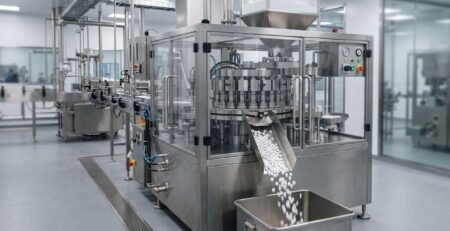
Use of a TDP-5 press for small-scale tablet manufacturing
Small-scale tablet manufacturing is becoming increasingly important in many industries. Besides the pharmaceutical industry, manufacturers of dietary supplements, laboratories, and research centers also use compact tablet presses for small-batch production. The TDP-5 press is particularly popular, distinguished by its ease of use, compact design, and reliable performance. For companies seeking a cost-effective tablet manufacturing solution, this machine offers an ideal entry point into semi-automated production.
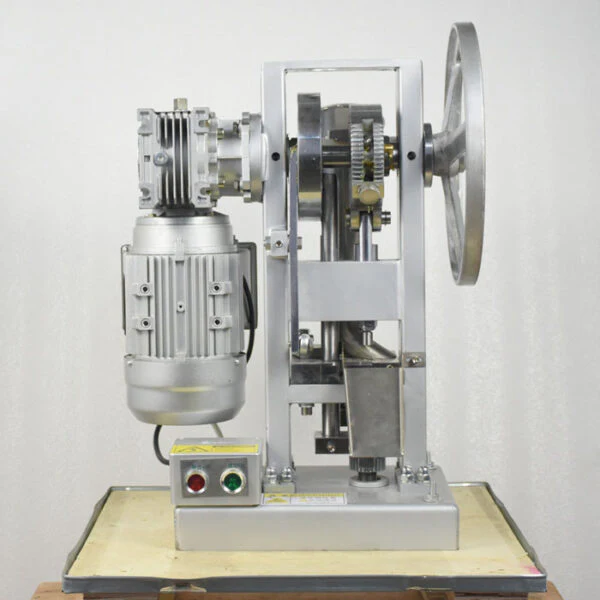
The TDP-5 is an eccentric tablet press specifically designed for small to medium production runs. It operates mechanically and enables the production of a wide variety of tablet shapes with a pressing force of up to five tons. Thanks to its robust construction, the machine is suitable for processing powders from pharmaceutical raw materials as well as dietary supplements, herbal extracts, or chemical substances. The TDP-5 is particularly advantageous in small production facilities due to its flexibility and comparatively low maintenance requirements.
Proper preparation of the raw materials is crucial before using a tablet press. The powder must have a uniform particle size and sufficient flowability to ensure consistent dosing. Excipients such as binders or lubricants are often added to improve the stability and shape of the finished tablets. An inadequate mixture can lead to breakage, uneven hardness, or dosing inaccuracies. Therefore, the material should be thoroughly homogenized before processing.
After the powder is prepared, the TDP-5 press is set up. This involves mounting the die and punch according to the desired tablet size. The machine accommodates various diameters and shapes, allowing manufacturers to flexibly respond to different production requirements. Next, the fill quantity is adjusted. This directly determines the weight and thickness of the tablets. Precise calibration is essential to achieve consistent results and avoid production losses.
During the pressing process, the powder is automatically filled into the die and then compressed under high pressure. The quality of the tablets depends heavily on the set pressing pressure. Insufficient pressure leads to unstable tablets, while excessive pressure can cause cracks or deformation. The optimal setting must therefore be individually adjusted to the properties of the powder used. Many manufacturers conduct several test runs at the beginning to determine the ideal parameters.
A key advantage of the TDP-5 press lies in its ease of use. Even small companies without extensive industrial infrastructure can operate this machine efficiently. Its compact design allows for use even in limited production spaces. Furthermore, cleaning is relatively straightforward, which is particularly beneficial when frequently changing recipes. All product-contacting parts should be cleaned regularly to prevent cross-contamination and maintain hygiene standards.
Quality control plays a crucial role in the production of high-quality tablets. After pressing, the tablets should be checked for weight, hardness, disintegration time, and visual quality. Even slight deviations can affect the product's efficacy or shelf life. Many small manufacturers underestimate this step, although it is essential for professional production. Regular inspections allow for the early detection of errors and the optimization of production processes.
Proper maintenance of the TDP-5 press significantly contributes to the machine's lifespan. Moving parts must be lubricated regularly to reduce wear. Dies and punches should also be inspected for damage, as even minor defects can affect tablet quality. With correct maintenance, a TDP-5 press can be used reliably for many years, providing consistent production output.
Compared to fully automated industrial machines, the TDP-5 offers a significantly more cost-effective solution for small production runs. It is ideally suited for startups, laboratories, or companies that want to test new products before investing in larger production facilities. At the same time, the machine enables professional tablet manufacturing with high precision and consistent results. Particularly in the dietary supplement sector, the demand for flexible production solutions is increasing, which is why compact tablet presses are being used more and more frequently.
The TDP-5 is also frequently used in research and development departments. It allows for the production of small test batches without incurring high production costs. Developers can quickly test and adjust different formulations, thereby shortening development times and bringing new products to market more efficiently.
In summary, the TDP-5 press is a practical and economical solution for small-scale tablet manufacturing. Its ease of use, flexible application options, and robust construction make it a popular choice for many industries. With proper raw material preparation, precise machine setup, and consistent quality control, even small manufacturers can achieve professional results. For those seeking a reliable entry-level tablet production solution, the TDP-5 press offers a powerful and versatile machine.
Fazit: Die TDP-5 ist eine wirtschaftliche Einstiegslösung für die Tablettenherstellung im kleinen Maßstab
Die TDP-5 ist eine mechanische Exzenter-Tablettenpresse mit bis zu fünf Tonnen Pressdruck (ca. 50 kN) und eignet sich für Start-ups, Labore und Entwicklungsabteilungen. Sie ist einfach zu bedienen, kompakt, wartungsarm und verarbeitet pharmazeutische Rohstoffe, Nahrungsergänzungsmittel, Kräuterextrakte und chemische Substanzen. Gute Ergebnisse hängen von gut homogenisiertem, fließfähigem Pulver, präziser Einstellung von Füllmenge und Pressdruck sowie konsequenter Qualitätskontrolle ab. Regelmäßige Reinigung und Wartung sichern eine lange Lebensdauer und eine stabile Produktion.
Gleichmäßige Korngröße, gute Fließfähigkeit, Bindemittel und Gleitmittel, gründliche Homogenisierung
Konstante Dosierung, keine Brüche oder Härteschwankungen
Einrichtung
Matrize und Stempel montieren, Füllmenge einstellen, kalibrieren, Testläufe
Gleichbleibendes Gewicht und Dicke, weniger Ausschuss
Qualitätskontrolle
Gewicht, Härte, Zerfallszeit, optische Prüfung
Fehler früh erkennen, Wirksamkeit und Haltbarkeit sichern
Wartung
Bewegliche Teile schmieren, Matrizen und Stempel prüfen, Teile regelmäßig reinigen
Lange Lebensdauer, keine Kreuzkontamination
Einsatzbereiche
Start-ups, Labore, F&E, Nahrungsergänzungsmittel
Kleine Chargen und schnelle Rezepturtests
FAQ: TDP-5 Tablettenpresse
Was ist eine TDP-5 Tablettenpresse? Die TDP-5 ist eine mechanische Exzenter-Tablettenpresse für kleine bis mittlere Produktionsmengen. Sie presst Pulver mit bis zu fünf Tonnen Druck zu Tabletten und wird in Laboren, Start-ups und der Nahrungsergänzungsmittelherstellung eingesetzt.
Wofür wird eine TDP-5 verwendet? Eine TDP-5 wird für kleine Chargen von Tabletten aus pharmazeutischen Rohstoffen, Nahrungsergänzungsmitteln, Kräuterextrakten und chemischen Substanzen genutzt. Sie ist auch in Forschung und Entwicklung beliebt, um Rezepturen schnell zu testen.
Wie stellt man den Pressdruck bei der TDP-5 richtig ein? Der Pressdruck wird an das jeweilige Pulver angepasst, meist über mehrere Testläufe. Zu wenig Druck ergibt instabile Tabletten, zu viel Druck führt zu Rissen oder Verformungen. Danach werden Gewicht, Härte und Zerfallszeit kontrolliert.
Wie wartet man eine TDP-5-Tablettenpresse? Bewegliche Teile werden regelmäßig geschmiert, Matrizen und Stempel auf Beschädigungen geprüft und alle produktberührenden Teile gereinigt. Bei guter Pflege läuft die Presse viele Jahre zuverlässig
Eine moderne Tablettenpressmaschine ist das technologische Herzstück der modernen pharmazeutischen Produktion, der chemischen Industrie sowie der Herstellung von Nahrungsergänzungsmitteln. Als...
Die moderne Pharmaindustrie und die Nahrungsergänzungsmittelbranche stehen kontinuierlich vor der Herausforderung, enorme Stückzahlen bei gleichbleibend hoher Qualität zu produzieren. Hier...
Die Herstellung von Tabletten hat sich im Laufe der Jahrzehnte von einem einfachen handwerklichen Prozess zu einer hochkomplexen, technologisch fortgeschrittenen...
Die pharmazeutische Produktion steht unter einem stetigen Druck, Durchsatzraten zu erhöhen, die Produktqualität zu stabilisieren und gleichzeitig die Betriebskosten durch...